
Why kids go quiet with parents
In parent-free conversations, teens and tweens shared what shuts them down. Here're a few quotes:
I love my parents, but when I talk, it turns into what I did wrong.”
They give advice right away, but I just want them to get it first.”
If I tell them something, it turns into a big talk.”
I'm afraid I'll get in trouble, so I keep it short.”
Saying 'fine' is easier. I don't want to disappoint anyone.”
When they ask a bunch of questions fast, I want to disappear.”
I'm still figuring it out. It's easier to talk to friends or online.”
The #1 thing kids want when they're upset
62%
want their parents to listen
Only 28% said they want advice.
Source: Walton Family Foundation and Gallup, Voices of Gen Z, 2024. 1,675 kids ages 10 to 18 and their parents, U.S.
“But I do listen! They just don't share anything.”
You ask about their day. “Fine.” You try again. “Nothing.”
So you stop. You don’t want to push. But you don’t want to give up, either.
You used to hear about the little things. Now you wonder whether they’d tell you the big ones.
That distance hurts.
Here’s the truth: some of it is simply part of growing up. Kids need more privacy, more of a world that’s theirs. But sometimes they also hold back because they’re not sure what will happen if they open up.
A big reaction? A lecture? A consequence? Or a quick “Don’t worry about it”?
So “fine” feels easier. That doesn’t mean they love you any less.
It’s not just whether you listen. It’s how you listen and respond.
Small shifts can make it easier for them to come to you, even with the hard stuff.
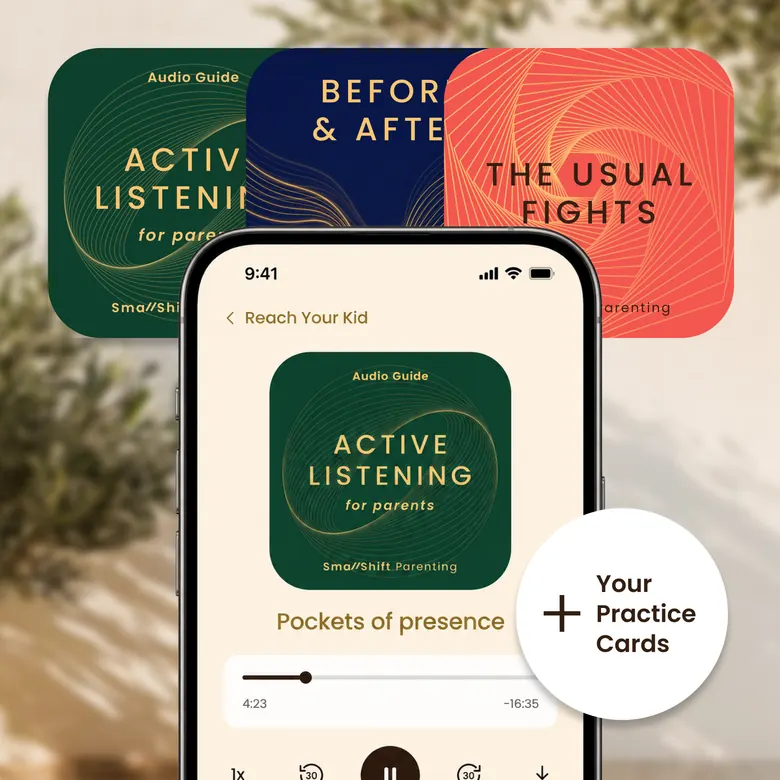
Reach Your Kid
A guided audio program
to hear more than "fine."
Learn it in the car. Use it at dinner.
What you'll learn:
- Pick a low-pressure moment to connect
- Hear them out before offering advice
- Ask a question that leaves room for an answer
- Get unstuck from the fights you keep having
- Hold the line without a lecture
- Prepare for a hard talk, and repair after a blow-up
Founding price $79
$99 · Yours to keep
through October 26, 11:59 pm Pacific. Then $99.
You're here early: Reach Your Kid is opening for the first time.
Buy Now — $79Buy NowOne-time purchase. Try it for 90 days. If it isn't right for you, email us with a brief reason for a full refund.
Listen to the free chapterA glimpse of what you'll learn
What, not why
“Why” can sound like an accusation. Here’s how to ask instead.
A good practical rule for clarifying questions is to lean on “what” and “how” instead of “why”. “Why did you do that?” is often the hardest question for a tween or teen to answer in the moment. Many times they do not fully know why they did something, and the word “why” can land like an accusation. Their brain hears, “Defend yourself,” so they go into protection mode instead of reflection mode.
Questions like “What happened?” or “How did it end up this way?” keep the door open. They invite your child to tell the story instead of justify their choices.
You can often keep the same curiosity and simply shift the wording. Instead of “Why are you late,” you might say, “I noticed it is eleven. What happened on the way home?” or “How did you end up getting in later than we planned?” Instead of “Why are you so upset about that,” you might try, “How is this hitting you right now?” or “What about this is bothering you most?”
You are still asking for an explanation, but your tone is more, “Help me understand,” not “Prove you are not wrong.” That small language shift can make it much more likely that your child keeps talking instead of shutting down.
Who's this for

What helps:

What helps:


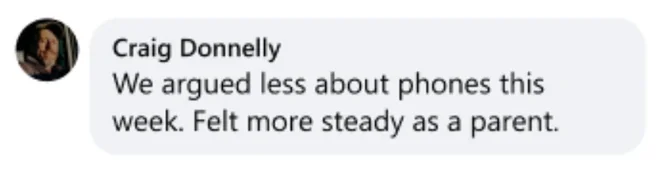
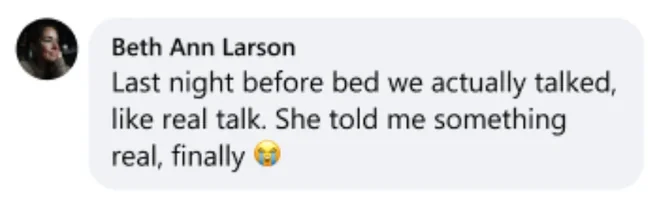
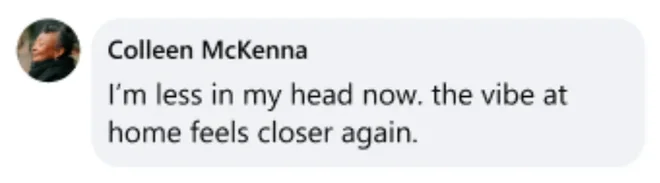
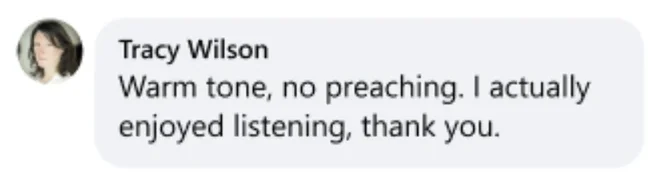
What parents said about the audio guide
What's inside
A podcast-style guide to active listening, in plain language, with scenes from real family life.
What it's for:
- Rebuild everyday closeness
- Worry less, understand more
- Lower the heat in hard talks
- Be the person they turn to
The chapters:
- Our noisy world Try for freeWhy connection can feel harder with tweens and teens today Listen to the free chapter
- What active listening really isActive listening in plain language: what it is and what it isn't
- Pockets of presenceHow to create moments that spark conversation
- Beyond "How was your day"Simple check-ins that actually work
- Let it all outGiving them the full floor
- The feeling channelValidation, mirroring, and other ways to hear what they really feel
- Understanding their point of viewClarifying, paraphrasing, and other tools to see their point of view
- Clear limits, kind responsesStaying kind while staying firm
- RecapA short summary you can replay anytime

Ten-minute sessions on the fights that keep coming back.
What it's for:
- See what the fight is really about. It's rarely just the phone.
- Leave with three ways out and one thing to try next time
- Keep your rule without the nightly fight
The sessions:
- ScreensPhones, games, and the fights around them
- ChoresWho does what, and when
- School PressureHomework and grades, and what they turn into
- The Messy RoomTheir space, your standards
- CurfewComing home, and what happens when it slips

Short tracks for right before a hard talk and right after one.
What it's for:
- Go in steady, with one opening line ready
- Come back after a blow-up, and leave out the "but"
- Keep what worked after a good talk
The tracks:
- Before the big talkA few minutes to steady yourself before you go in. And it's okay if the talk doesn't happen tonight.
- After the blow-upWhen it went badly and you want to come back. Own your part without punishing yourself.
- After the talkSomething worked. This helps you keep it.
Eight practice cards picked from your answers: two a week, each one a small thing to try once.
What it's for:
- Turn what you heard into one thing you actually try
- Practice on what's happening in your house, not a generic plan
- Keep going without streaks or scores. Nothing is counted.
How it comes together:
- Answer a few quick questions about how things are between you two lately. Under a minute.
- Your answers pick eight cards out of 58.
- A new card opens in your hub every few days for four weeks. Earlier cards stay open.
No app. No subscription. Your kid doesn't need to take part in any exercises or activities.
90‑day money‑back guarantee
One‑time purchase
Can I actually do this?
We made it simple on purpose.

"I don't have time or energy for something big."
That's why it's audio, not a course. A chapter on a walk, a card when you have a minute. No long PDFs, no schedule to keep.
"I've bought things like this before and never finished them."
We built this to feel like a podcast, not a lecture: warm, short, something you can actually enjoy. And you don't have to finish it to use it. When the same fight or the same silence comes back, there's a track you can play again.
Who made this
Reach Your Kid was created by SmallShift Parenting, a small studio focused on the intersection of parenting and education, translating proven ideas from psychology and communication into tools parents can actually use.
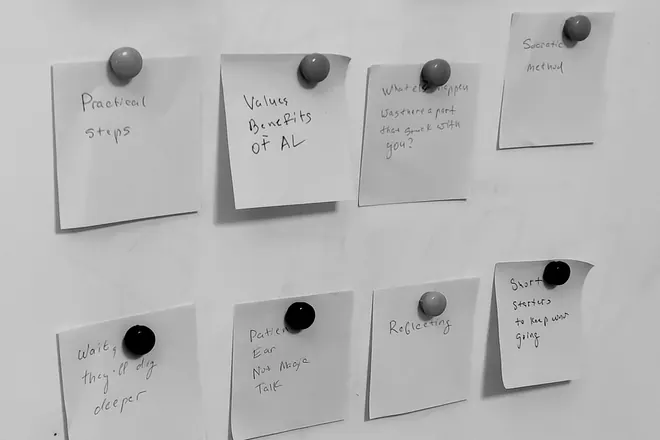
Based on:
Findings from classic works on listening and parenting
- Carl Rogers
- Thomas Gordon
Recent research on adolescent development and parent‑child communication
- Gallup, 2024
- Stanford, 2022
Proven practical communication techniques
- Mary Budd Rowe
- Matthew Lieberman
- Peter Gollwitzer and Paschal Sheeran
Every chapter, session, and track is read by .
“Hi, I’m Melissa. I’ve been a voice actress for seven years, with a background in early childhood education. I believe a human voice carries something words alone can’t: feeling, intention, and the sense of being heard. Recording this program was an honour, and I’d do it again in a heartbeat.”
We're a team of parents.
From parents to parents
Before we chose to create an audio guide on active listening for parents, we sat around a table and talked. It started with everyday moments with our kids, the conversations that went well, and the ones that did not. Pretty quickly, it turned into stories. After a couple of rounds, we found ourselves going further back, remembering what it felt like to be a kid trying to be understood.
So we built the guide as a bridge between the classics and what parents are up against now. We returned to the original ideas behind active listening, including Carl Rogers, and then layered in more recent research and modern, real-world translation, so the skill actually works in today's homes.
That's when it clicked. Each of us could name moments, as parents, when we would have loved a guide like this. If we are being truly honest, many of us also wished our own parents had something like it when we were growing up. Not because they were bad, but because so few families are ever taught the skill of listening in a way that helps another person truly feel heard.
That is what pulled us into this project. We wanted to take listening seriously without making anyone the problem. No blaming parents. No blaming kids. Just a clear look at how relationships actually work, especially in the years from about nine to eighteen.
So much changes in those years. Kids become more private. Parents are still responsible, still trying to guide, still trying to protect. And the space between those two truths can fill up fast with tension, misunderstandings, and long quiet spells.
We see active listening as a foundation skill for this season because it changes what your child feels around you. It can lower defensiveness. It can reduce the pressure that makes kids shut down. And it can help a parent move from guesswork to understanding, bit by bit.
At SmallShift Parenting, we focus on small changes with a large impact. Active listening fits that philosophy almost perfectly. Often, the difference between a real conversation and a shutdown is not a big parenting speech. It is the first ten seconds. The tone you use. The question you choose. The way you reflect what you hear.
Because life is busy and loud. Attention is split across screens, schedules, and stress. Listening is harder for everyone. Families feel that tension in a unique way.
We did not want to make a lecture. Most parents do not need more theory, especially at the end of a long day. That is why this guide is built to feel more like a podcast: clear, warm, engaging, and honest, with examples that sound like real life.
Active listening is not therapy, and it will not magically fix everything overnight. It will not control what your child shares, or when. But it can change the tone of a room. It can change the depth of a conversation.
And that can be enough.
We made this because we have been there.
We hope it meets you there, too.
Sincerely,
SmallShift Parenting Team
Why now
You don't have to wait
for things to go wrong

"Nothing dramatic is happening. Maybe it's just a phase."
Maybe it is. But even phases create patterns. Short answers and loaded topics can become the new normal if nothing changes.
"They're almost grown. Isn't it too late?"
It isn't. Older teens talk less, so each talk counts more. And listening is your skill, not theirs.
Start with the next conversation.
You don't have to wait for a blow-up to try a different response. Tonight's dinner or tomorrow's drive home will do.

Reach Your Kid
A guided audio program
to hear more than "fine."
$79$99
Founding price through October 26,
11:59 pm Pacific. Then $99.
- Active Listening Audio Guide
- The Usual Fights
- Before & After
- Your Practice Cards
- For parents
of kids 9 to 18 - Listen online
or download - One-time
purchase,
keep forever
90-day money-back guarantee. If it isn't right for you, email us with a brief reason for a full refund.
What it is, and what it isn't. Reach Your Kid is practice for everyday friction. It is not therapy, and it is not crisis care. It will not control what your child shares, or when. It changes what you do in the conversation.
FAQ
Free videos and podcasts can help, but they're usually scattered. Reach Your Kid is one path: nine chapters on listening, five sessions on the usual fights, three before-and-after tracks, and eight practice cards picked from your answers. When the same fight shows up again, you know which one to play.
One-time purchase. Your payment is processed by PayPro Global, which sends your receipt. After checkout, you get access to your Reach Your Kid hub. All audio is available to stream or download. Your practice cards open over four weeks, and earlier cards stay available.
Yes. Stream it in your hub or download the audio to your phone. Many parents listen in short chunks during walks, commutes, or evening resets.
Yes. The audio stands on its own. The practice cards are short, one step each, and they're there when you want one.
No. You can use the program on your own. The audio and practice cards focus on your questions, your responses, and what you do before or after a difficult conversation.
The skills are yours, not your kid's, and they don't depend on age: hearing them out before advice, staying in the room when the answer is "fine," coming back after a blow-up. The examples in the audio are built around the early teen years, when a lot of kids start to go quiet. With a 9-year-old, you're building the habit before the door starts closing. With a 17-year-old, you have fewer words and less time, so presence counts more than questions. The questions behind your practice cards ask where the friction is, not how old your kid is.
Yes. Hearing your child out doesn't mean changing every rule. A whole chapter of the guide is about this: Clear limits, kind responses. And the sessions in The Usual Fights are about keeping a limit without the nightly fight.
You answer a few multiple-choice questions, under a minute. Your answers pick eight cards out of a larger set. The first opens right away and the rest follow over four weeks. You can add the days to your calendar, and skipping a card is fine.
You can practice how you respond when conversations are brief, tense, or don't happen at all.
At the same time, if you ever notice urgent warning signs, such as your child withdrawing from everyone, suddenly abandoning things they used to enjoy, talking about self-harm, or saying they do not want to be here, it is important to reach out for professional support right away. This program is for everyday friction, not for crisis care. Most eye rolls, closed doors, and short answers are a normal part of growing independence.
Because the program lives here. Your cards open in your Reach Your Kid hub, right next to the audio. And if something isn't right, you email us directly.
Yes. If Reach Your Kid isn't right for you, email hello@smallshiftparenting.com within 90 days of purchase and tell us briefly why. We'll refund you in full through PayPro Global, to the way you paid. How soon it shows up depends on your bank. Refund Policy
PayPro Global is our payment partner. They handle the payment itself, so your card details go to them, not to us, and they meet the highest payment security standard (PCI DSS Level 1). Their name is the one you'll see on your receipt and on your card or bank statement, not SmallShift Parenting. Depending on your state, sales tax may be added at checkout. If you have any questions about your order, email hello@smallshiftparenting.com and we'll help.